
Simple Steps to Help Your Teen Get a Better Night’s Sleep
Simple Steps to Help Your Teen Get a Better Night’s Sleep
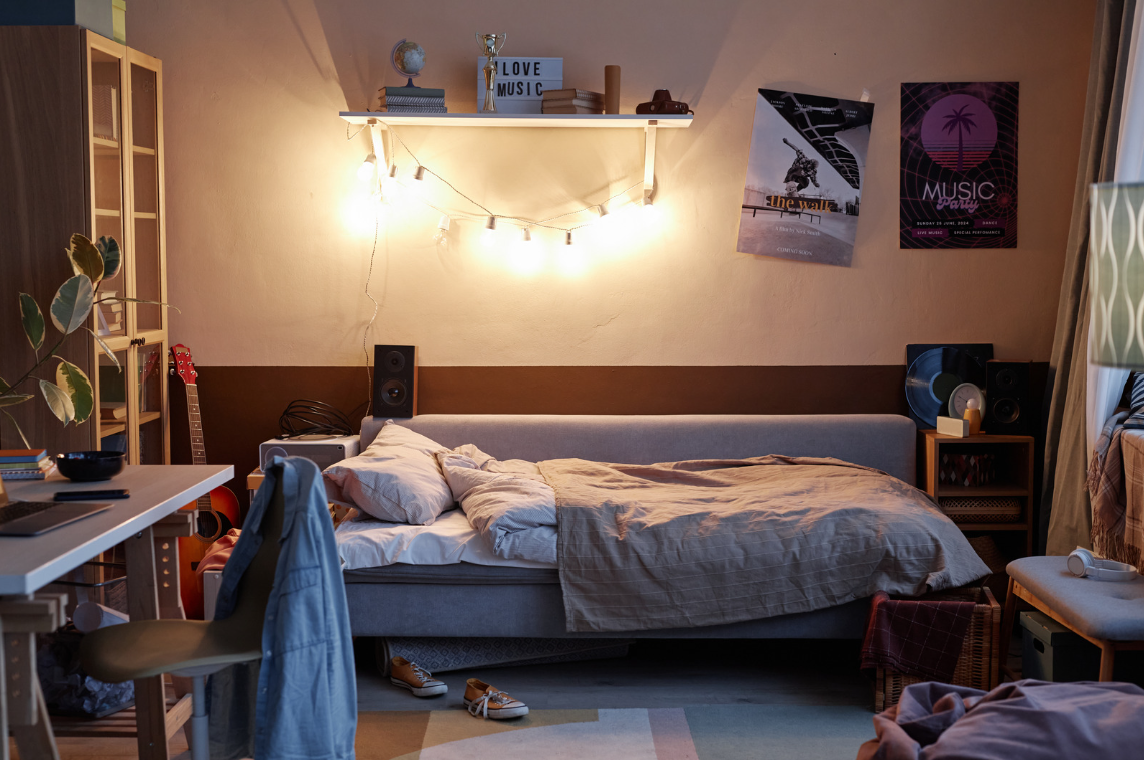
If you have a teenager who seems exhausted in the morning but suddenly wide awake at bedtime, you're certainly not the only parent dealing with it.
Sleep can become more difficult during the teenage years. Busy school days, homework, friendships, worries, social media and screens can all make it harder to switch off at the end of the day.
And when a young person isn't sleeping well, we often see the effects elsewhere too.
They may be more irritable, find it harder to concentrate, struggle to get out of bed, feel overwhelmed more easily or simply seem unlike themselves.
The good news is that improving sleep doesn't have to mean completely changing family life.
Small, consistent changes can make a real difference.
Here are five simple places to start.
1. Create a Wind-Down Routine
Teenagers may have outgrown bedtime stories, but they haven't outgrown the need for a bedtime routine.
Our brains benefit from predictable cues that tell us:
The day is finishing. It's time to slow down.
Encourage your teen to create a simple routine for the last 30–60 minutes before bed.
That might include:
having a shower
putting on comfortable clothes
dimming the lights
listening to calm music
reading
doing some gentle stretching
preparing their school things for the following morning
It doesn't need to be complicated.
In fact, the simpler it is, the more likely they are to keep doing it.
2. Give the Phone Somewhere Else to Sleep
This can be a difficult one!
Phones give teenagers access to friends, entertainment, social media, games and an almost endless supply of things to look at.
So asking a tired teenage brain to simply decide, That's enough. I'll go to sleep now, isn't always realistic.
Instead of turning the phone into a nightly battle, agree together on a place where it can charge overnight that isn't beside the bed.
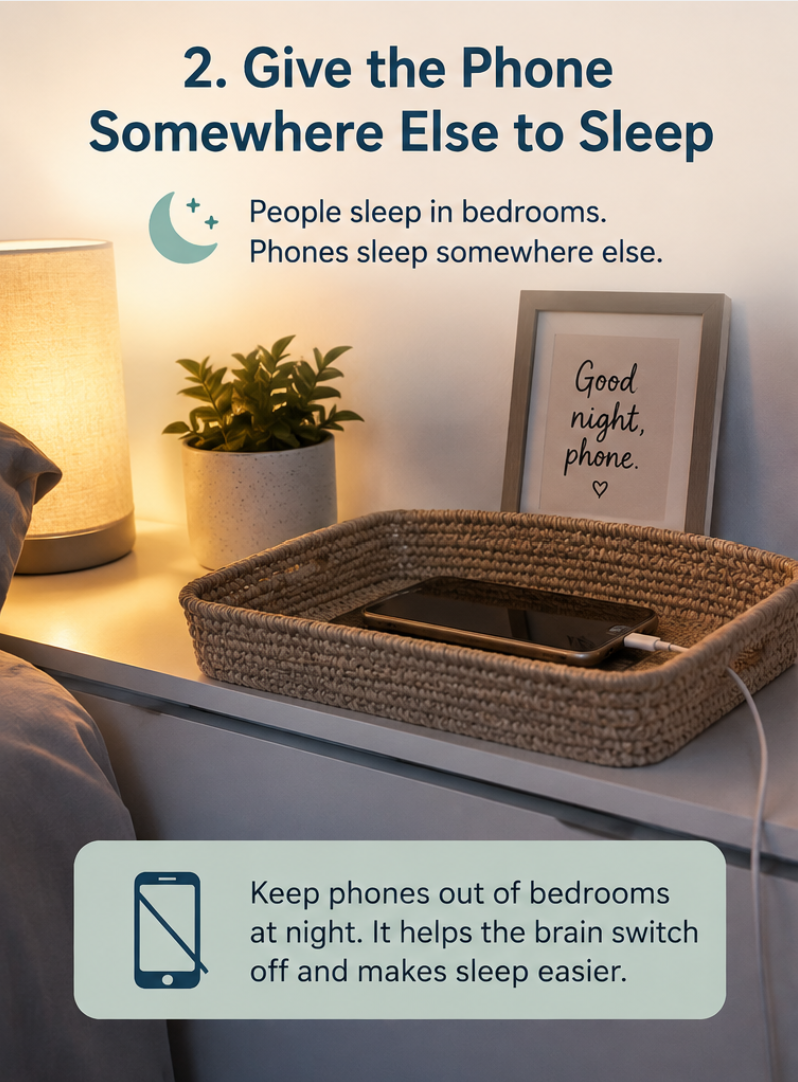
A useful family rule might be:
People sleep in bedrooms. Phones sleep somewhere else.
And if possible, adults should model the behaviour too.
It's much easier to introduce a family habit than a rule that appears to apply only to the teenager.
3. Help Their Brain Empty the Day
Sometimes the body is tired but the mind isn't.
The moment everything becomes quiet, thoughts can appear:
What if I don't do well in that test?
Why did I say that earlier?
What do I need to remember tomorrow?
What if something goes wrong?
Rather than trying to force those thoughts away, encourage your teen to get them out of their head and onto paper.
Keep a notebook beside the bed and spend a few minutes writing down:
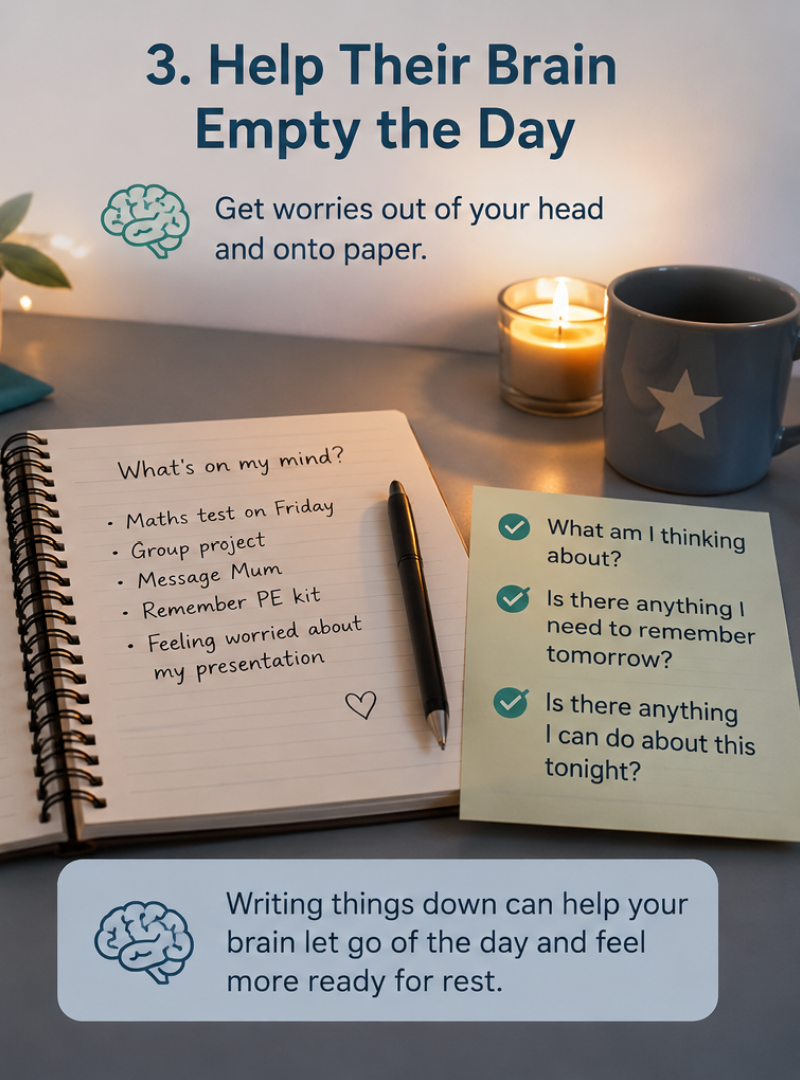
What am I thinking about?
Is there anything I need to remember tomorrow?
Is there anything I can do about this tonight?
If the answer to the last question is no, it can wait until tomorrow.
The problem doesn't have to be solved at bedtime.
4. Use the Body to Tell the Brain It's Safe to Rest
When we're stressed or anxious, simply telling ourselves to relax often doesn't work.
Sometimes it's easier to begin with the body.
Try a simple breathing exercise:
Breathe in gently through the nose.
Allow the breath out slowly.
Then repeat, making the out-breath comfortable and unhurried.
Your teen could also notice where they're holding tension, perhaps their shoulders, jaw, hands or stomach, and consciously allow those areas to soften.
The aim isn't to make sleep happen.
It's simply to create the conditions in which the body can begin to settle.
5. Don't Turn Sleep Into Another Thing to Worry About
This one is particularly important for anxious young people.
When a teenager can't sleep, thoughts can quickly become:
I HAVE to sleep.
I'm going to be exhausted tomorrow.
Why can't I sleep?
Everyone else can do this.
Now they're not only awake, they're anxious about being awake.
Instead, help take some of the pressure away.
You might say:
You don't have to make yourself sleep. Just allow your body to rest.
Resting quietly is still rest.
Reducing the struggle around sleep can sometimes be more helpful than focusing constantly on the number of hours they've managed to get.
Start With One Small Change
If your teenager's sleep routine has completely disappeared, don't try to introduce five new rules tonight.
Choose one small change.
Perhaps tonight the phone charges outside the bedroom.
Tomorrow they try ten quiet minutes before bed.
Next week they start writing down worries rather than carrying them into the night.
Small changes are easier to repeat.
And repeated small changes become habits.
We don't need perfection. We need progress.
A Note for Parents
Teenagers still need our guidance, even when they're very good at telling us they don't!
Try to approach sleep as something you're helping them figure out rather than something you're policing.
Ask:
What do you think would help you sleep better?
You may be surprised by what they already know.
And when young people are involved in creating the solution, they're much more likely to take ownership of it.
When to Seek Additional Support
Occasional poor sleep is common, but ongoing sleep difficulties shouldn't simply be dismissed as being a teenager.
If your teen regularly struggles to fall or stay asleep, is extremely tired during the day, snores heavily, has significant changes in their mood or functioning, or their sleep difficulties are affecting school or everyday life, speak to your GP or another appropriate healthcare professional.
Sometimes sleep difficulties need more than a change in routine.
One Small Step Tonight
Good sleep isn't created by one perfect bedtime.
It's built through small habits that help the brain and body recognise when it's time to slow down.
So rather than trying to change everything tonight, ask your teenager:
What's one small thing we could change this evening that might make bedtime feel a little easier?
Then start there.
Need Support?
Kids Anxiety Help provides practical tools and resources to help children and young people manage anxiety, develop confidence and build emotional wellbeing.
Explore more resources and support through Kids Anxiety Help.
Yvonne Holmes
Teacher | Counsellor | NLP Practitioner | Clinical Hypnotherapist | Author
Kids Anxiety Help